
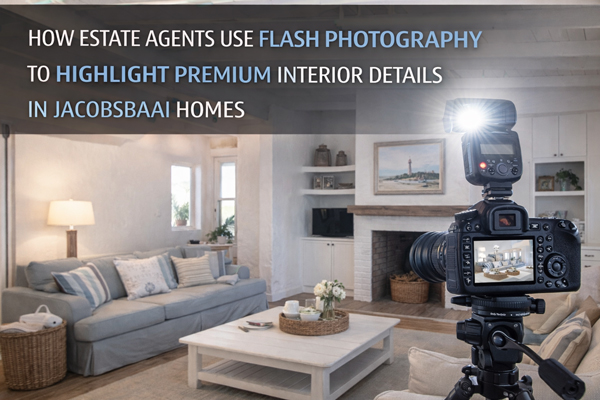
How Estate Agents Use Flash Photography to Highlight Premium Interior Details in Jacobsbaai Homes
Why Interior Details Shape Buyer Perception First
Buyers rarely fall in love with a floor plan.
They fall in love with how a space feels.
In Jacobsbaai, where many homes share similar layouts and coastal proportions, buyers differentiate properties based on interior quality rather than size. Materials, finishes, textures, and craftsmanship quietly determine whether a home feels premium or average.
This is where flash photography in real estate becomes a decisive tool. When used correctly, it allows estate agents to reveal interior details clearly and honestly, helping buyers recognise quality without relying on exaggerated styling or marketing language.
Estate Agent Objectives When Marketing Premium Interiors
Estate agents marketing Jacobsbaai homes are not just presenting rooms. They are protecting perceived value.
Their goals typically include:
Demonstrating craftsmanship and build quality
Showing the condition of interior finishes
Supporting premium positioning visually
Reducing buyer uncertainty before enquiry
This is why interior property detail photography plays such a central role in modern listings. Wide shots explain layout, but detail photography explains quality.
In Jacobsbaai estate agent marketing, where lifestyle buyers are often cautious and comparison-driven, this distinction is critical.
Why Interior Details Signal Value and Craftsmanship
Buyers associate visible detail with care.
Clear images of cabinetry, stone surfaces, timber finishes, tiles, fixtures, and fittings suggest intention and investment. They indicate that a home has been thoughtfully designed and properly maintained.
This is especially true in premium property photography, where buyers expect interiors to feel refined and durable, not just visually attractive.
When details are poorly lit or omitted, buyers assume compromise. When they are shown clearly, buyers assume confidence.
The Limits of Ambient Light for Interior Detail Photography
Natural and ambient light create atmosphere, but they are unreliable for precision.
In coastal homes, light shifts throughout the day. Shadows fall unevenly. Reflections obscure surfaces. Fine textures disappear. This is a common issue when photographing interior finishes in real estate, particularly in homes with neutral palettes and natural materials.
Without controlled lighting, even high-quality interiors can appear flat, dull, or inconsistent in photographs.
Flash vs Ambient Light in Interior Photography
The debate around flash vs ambient light interior photography is often misunderstood.
Flash is not meant to overpower natural light. In professional use, it complements it.
In real estate flash photography, flash is used to balance exposure, lift shadow detail, and reveal texture while preserving the natural mood of the space. When executed correctly, viewers do not notice flash at all. They simply see clarity.
This balance is a cornerstone of effective real estate photography lighting.
How Flash Photography Isolates Premium Interior Features
Flash allows photographers to control where attention goes.
By shaping light carefully, key interior elements can be isolated without distraction. Built-in cabinetry, stone countertops, textured walls, bespoke joinery, and feature finishes become visually legible.
This approach is essential in interior detail photography for real estate, where the goal is not drama, but accuracy and emphasis.
Flash lighting for interior details ensures that finishes are read correctly, not lost to shadow or glare.
Revealing Texture and Material Quality Accurately
Premium interiors rely on materials that require directional light to photograph well.
Stone, wood grain, brushed metals, textured tiles, and plaster finishes all depend on controlled lighting to show depth and surface quality. Ambient light alone often fails to reveal these characteristics.
Professional interior flash photography allows these materials to be presented as they appear in real life. Textures feel tangible. Edges separate. Quality becomes visible.
This clarity is vital for buyers assessing a property remotely.
Supporting Premium Positioning Without Overstatement
True premium positioning is subtle.
Over-lit or heavily edited interiors feel artificial and untrustworthy. Flash photography, when used professionally, avoids this trap. It clarifies rather than exaggerates.
Listings that include crisp, well-lit detail images feel considered and intentional. Buyers associate this with higher standards and better maintenance.
This is why property photography for premium homes increasingly relies on controlled flash rather than ambient light alone.
How Interior Detail Photography Builds Buyer Trust
Trust is built visually before it is verbal.
Clear interior detail images suggest transparency. Buyers feel they are seeing the property honestly, not selectively. This reduces scepticism and hesitation.
Poorly lit or missing detail photos have the opposite effect. Buyers assume shortcuts or hidden issues.
Using flash to present details accurately removes this friction early in the buyer journey.
Improving Enquiry Quality Through Better Lighting
Unclear listings generate low-quality enquiries.
Buyers enquire simply to confirm condition or finishes, leading to wasted conversations and unnecessary viewings.
Well-executed interior detail photography real estate reduces this behaviour. Buyers enquire because they are interested, not because they are unsure. Conversations become more focused and productive.
This benefits estate agents and sellers alike.
Ethical Use of Flash in Property Marketing
Flash must always be used responsibly.
Its purpose is to clarify reality, not disguise flaws. Over-lighting or excessive retouching damages trust quickly, particularly in smaller markets like Jacobsbaai where reputation matters.
Ethical property marketing photography uses flash to present interiors as they truly are under balanced conditions that reflect human perception.
Agents who prioritise honesty experience smoother negotiations and fewer surprises at viewing stage.
Why Flash Photography Matters Specifically in Jacobsbaai
Jacobsbaai attracts buyers looking for lifestyle, comfort, and long-term suitability.
These buyers pay close attention to interiors because they imagine daily living, not just ownership. They care about materials, finishes, and how a home will age over time.
In this context, property photography Jacobsbaai that includes flash-assisted interior detail imagery becomes a clear competitive advantage.
Across the West Coast, this approach increasingly separates premium listings from average ones.
Flash Photography as Part of a Complete Interior Strategy
Flash photography works best as part of a system.
Wide shots establish layout and flow. Detail shots establish quality and craftsmanship. Together, they create a complete and trustworthy visual narrative.
Estate agents who plan for both produce listings that feel confident, transparent, and professionally marketed.
A Confident Closing
Flash photography allows estate agents in Jacobsbaai to highlight premium interior details that communicate quality, craftsmanship, and care.
By using professional lighting strategically, agents clarify value, support premium positioning, and build buyer trust before the first conversation takes place. Interior detail images reduce doubt, strengthen engagement, and attract more confident enquiries.
In a market where buyers compare closely and decide visually, interior details are not optional.
They are often what define whether a home feels premium or forgettable.
If you want your Jacobsbaai listings to do more than show rooms—if you want them to demonstrate quality—flash photography is not an add-on.
It is a deliberate tool for marketing interiors properly.


