
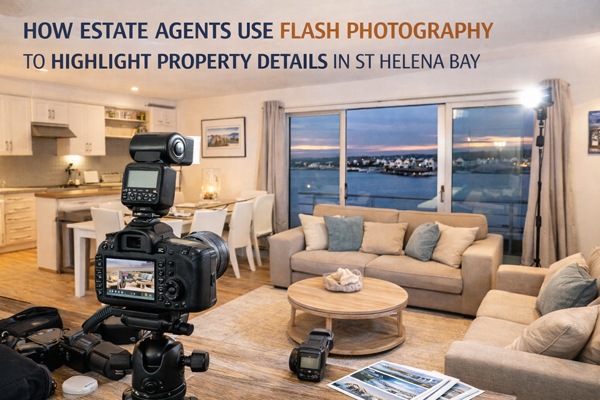
How Estate Agents Use Flash Photography to Highlight Property Details in St Helena Bay
Property Value Is Communicated in the Small Things
Most buyers decide how they feel about a property before they consciously decide whether they like it.
That feeling is shaped visually. In coastal markets like St Helena Bay, where many homes share similar layouts, sizes, and price brackets, value perception is often determined by details rather than floor plans. Finishes, textures, materials, and condition quietly influence whether a property feels premium, average, or neglected.
This is where flash photography in real estate becomes a powerful tool. When used correctly, it allows estate agents to present property details with clarity and honesty, reinforcing quality without exaggeration.
Estate Agent Objectives When Marketing Property Details
Estate agents are not simply advertising space. They are positioning value.
When marketing a home, agents aim to:
Demonstrate quality and condition
Differentiate similar listings
Support pricing confidence
Reduce buyer doubt before enquiry
Detail-driven imagery supports all of these goals. While wide shots show layout, property detail photography shows care. It reveals how a property has been finished, maintained, and lived in.
In St Helena Bay estate agent marketing, this distinction matters. Buyers often compare several listings quickly, and details become the deciding factor.
Why Detail Photography Builds Buyer Confidence
Buyers do not trust listings that feel incomplete.
When important details are missing or poorly lit, buyers assume the worst. They question condition. They expect compromise. Even strong properties lose credibility if details are hidden or unclear.
Real estate detail photos answer these unspoken concerns. They show handles, taps, cabinetry, stone surfaces, flooring, joinery, and finishes clearly. They give buyers evidence rather than promises.
Detail images slow buyers down. They encourage closer inspection and signal transparency.
The Limitation of Ambient Light in Interior Photography
Natural and ambient light are excellent for mood and space, but they are inconsistent.
Coastal weather, interior orientation, and window placement often create uneven lighting. Shadows fall across finishes. Reflections obscure surfaces. Textures flatten or disappear entirely.
This is especially problematic when photographing finishes in real estate, where clarity matters more than atmosphere. Without intervention, important materials can look dull, worn, or unclear even when they are not.
Flash vs Ambient Light in Property Photography
The debate around flash vs ambient light property photography is often misunderstood.
Flash is not meant to replace natural light. Its purpose is to control light.
Professional photographers use flash to fill shadows, balance contrast, and reveal texture while preserving the natural feel of the space. When done properly, viewers rarely notice flash at all. They simply see clarity.
This balance is central to real estate photography lighting. Flash becomes a corrective tool rather than a stylistic one.
How Flash Reveals Materials and Textures Accurately
Certain surfaces do not photograph well without controlled light.
Stone countertops, wood grain, tile finishes, brushed metals, and cabinetry details rely on directional lighting to show texture and depth. Ambient light often washes these details out or creates harsh reflections.
Flash lighting for interiors allows photographers to shape light intentionally. Textures become visible. Materials read correctly. Finishes feel tactile rather than flat.
This clarity is essential for buyers evaluating quality remotely.
Flash Photography and Premium Positioning
Premium positioning is rarely about size alone.
Listings that include well-lit detail images feel more deliberate and considered. Buyers associate clear detail photography with higher standards and better maintenance, even when the property itself is modest in scale.
This is why property photography for premium listings often relies heavily on flash-assisted detail shots. The goal is not luxury exaggeration, but quality confirmation.
Estate agents use this technique to justify attention, not inflate expectations.
How Detail Photography Improves Listing Performance
Wide shots attract clicks. Detail shots sustain engagement.
Once buyers open a listing, professional property photography keeps them scrolling. Detail images encourage slower, more thoughtful viewing. Buyers spend more time evaluating rather than skimming.
This increased engagement supports stronger listing performance across portals without changing pricing or exposure.
In competitive coastal markets, attention is currency. Detail photography helps listings hold it.
Reducing Low-Quality Enquiries Through Better Detail Images
Unclear listings generate uncertainty-driven enquiries.
Buyers enquire simply to clarify basics about condition or finishes. This leads to wasted time for agents and unnecessary viewings for sellers.
Clear real estate flash photography reduces this problem. Buyers enquire with confidence, having already understood the property visually. Conversations become more productive and focused on suitability rather than reassurance.
Flash Photography and Ethical Representation
Flash must be used responsibly.
Its role is to clarify reality, not disguise flaws. Ethical professional interior flash photography avoids harsh lighting, excessive retouching, or misleading angles.
When used correctly, flash actually improves honesty by showing spaces as they would appear in balanced, human vision rather than under the limitations of a camera sensor.
Estate agents who prioritise accuracy build long-term trust with buyers and sellers alike.
Supporting Seller Confidence Through Detail-Driven Marketing
Detail photography is as much for sellers as it is for buyers.
Sellers want to see their property represented properly. When they see crisp, well-lit images of finishes and features, confidence increases. They feel their home is being marketed with care and intention.
This confidence supports pricing discussions and reduces anxiety during slower periods. Agents who invest in detail imagery often experience fewer challenges around trust and expectation management.
Why Flash Photography Matters in St Helena Bay
St Helena Bay attracts buyers seeking lifestyle, comfort, and longevity.
These buyers pay attention to details. They imagine daily use, long-term wear, and maintenance. They want reassurance that a property has been built and maintained properly.
In this context, property photography St Helena Bay that includes clear, flash-assisted detail imagery becomes a competitive advantage. It communicates care without words.
Across the West Coast, this approach increasingly separates strong listings from forgettable ones.
Flash Photography as Part of a Complete Visual System
Flash photography works best when it complements, not replaces, other imagery.
Wide shots establish space and flow. Detail shots establish quality. Together, they form a complete visual narrative that buyers can trust.
Estate agents who plan for both produce listings that feel intentional, transparent, and professional.
A Confident Closing
Flash photography helps estate agents in St Helena Bay highlight the property details that quietly communicate quality, care, and value.
By using flash strategically, agents improve clarity, support premium positioning, and build buyer trust before the first conversation takes place. Detail images reduce doubt, strengthen engagement, and attract more confident enquiries.
In a market where buyers compare closely and decide visually, details are not secondary.
They are often what make the difference.
If you want your listings to do more than show space—if you want them to demonstrate quality—professional flash photography is not an extra.
It is a deliberate tool for presenting property properly.


