
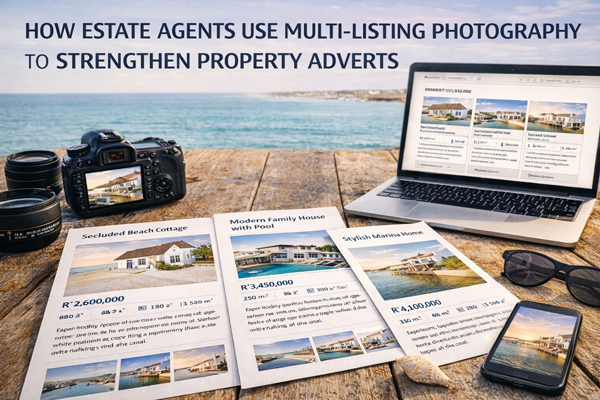
How Estate Agents Use Multi-Listing Photography to Strengthen Property Adverts
Property Adverts Compete in Grids, Not in Isolation
Most property adverts are not judged one by one. They are judged in grids.
Buyers browsing West Coast property listings scroll through rows of competing homes, comparing visuals at a glance before reading a single word. In these moments, photography is not simply showing a property. It is competing for relevance, credibility, and attention.
This is where multi listing photography becomes a strategic advantage rather than a stylistic choice. Estate agents who understand how listings are consumed on portals design their photography to perform in comparison environments, not just as standalone images.
In areas like Vredenburg, where similar homes often appear side by side, photography determines which listings are clicked and which are ignored.
How Multi-Listing Platforms Shape Buyer Behaviour
Property portals are comparison tools by design.
Buyers do not evaluate listings deeply at first. They scan thumbnails, judge brightness, assess composition, and decide within seconds whether a listing deserves attention. This makes property portal photography fundamentally different from brochure or social media photography.
Listings succeed when their images remain clear, balanced, and legible at small sizes. This is why grid view property photography matters so much. If a photo collapses visually when reduced to a thumbnail, it fails before the buyer ever opens the listing.
Multi-listing photography accounts for this reality. It prioritises clean framing, consistent exposure, and neutral realism so images hold up across all display formats.
Why Listing Photos Matter More Than Agents Realise
Many agents underestimate just how much weight photography carries in buyer decisions.
Buyers may believe they are choosing based on price or location, but behaviour tells a different story. Listings with strong visuals receive more clicks, longer viewing time, and higher engagement. This directly affects property listing click through rate, even before price is considered.
This is why the question why listing photos matter is not theoretical. It is behavioural. Photography determines whether a property enters the buyer’s consideration set at all.
Agents who invest in professional property listing photos are not decorating listings. They are ensuring listings are seen.
MLS Style Property Photography as a Competitive Standard
One of the most effective approaches to multi-listing environments is MLS style property photography.
This style prioritises consistency, accuracy, and clarity over dramatic flair. Images are evenly lit, vertically correct, and sequenced logically. The goal is not emotional exaggeration, but confident understanding.
In competitive markets, this approach performs exceptionally well because it aligns with how buyers actually browse. Listings feel organised, reliable, and professional.
For agents managing multiple properties simultaneously, MLS-style systems make it possible to maintain estate agent photography standards across an entire portfolio rather than relying on one-off shoots.
Why Consistency Across Portals Protects Performance
Buyers rarely encounter a listing once.
They see it on multiple portals, shared messages, saved searches, and alerts. Each exposure reinforces or weakens perception. This makes consistent property photography one of the most overlooked performance factors in real estate marketing.
Inconsistent visuals create doubt. Buyers wonder whether listings are rushed, neglected, or unevenly managed. Consistent visuals do the opposite. They signal professionalism and care.
This is especially important for estate agent listings South Africa, where buyers often compare across regions rather than within a single suburb.
Consistency stabilises perception across every platform where a listing appears.
Professional Photos Perform Better on Property Portals
Professional photography outperforms casual images for a simple reason. It reads clearly under pressure.
On portals, images are compressed, resized, and displayed in grids. Photography for property portals must survive these constraints without losing clarity.
Professional real estate photos are composed with these limitations in mind. They use controlled angles, balanced light, and neutral colour so the property remains legible at every size.
This is why real estate listing photography directly influences engagement. Buyers do not consciously analyse quality, but their behaviour reflects it.
Multi-Listing Photography as a System, Not a Shoot
The biggest mistake agents make is treating photography as a one-off task.
Multi-listing photography works when it is systemised. This means consistent lighting approach, predictable angles, repeatable editing standards, and structured image sequencing across listings.
When this system is in place, every new listing reinforces the agent’s visual brand. Buyers learn what to expect. Sellers see consistency. Trust compounds.
This approach is foundational to real estate branding photography, where the agent’s identity is built through repetition, not individual hero shots.
Preventing Weak Listings from Undermining Strong Ones
One poorly photographed listing can undermine an entire portfolio.
Buyers do not separate listings by context. They associate all listings from an agent with the weakest example they see. This is why multi listing photography is as much about risk management as it is about performance.
By maintaining a baseline standard across all properties, agents prevent weaker listings from dragging down stronger ones.
This matters deeply in Vredenburg estate agent marketing, where buyers frequently encounter the same agents across multiple listings.
Photography and Perceived Value Protection
Value perception is visual long before it becomes numerical.
When listings appear poorly presented, buyers assume flexibility. They negotiate harder. They justify discounts emotionally before making offers rationally.
Professional photography removes unnecessary reasons to discount. It does not inflate value. It protects it.
This is particularly important across property marketing West Coast South Africa, where buyers compare towns, not just streets. Presentation quality determines whether a listing holds its value in regional comparison sets.
Supporting Seller Confidence Through Visual Consistency
Sellers watch marketing closely.
When they see their property photographed to the same standard as others in an agent’s portfolio, confidence increases. They feel represented fairly and professionally.
This confidence reduces panic, improves pricing alignment, and stabilises negotiations.
Agents who maintain estate agent photography standards spend less time managing seller anxiety and more time progressing transactions.
Why Professional Photography Improves Marketing Efficiency
Poor visuals require more exposure to compensate.
Better visuals make existing exposure work harder. Listings receive more clicks without increased spend. Engagement improves organically.
This is one of the most effective ways to improve property listings without changing platforms, pricing, or advertising volume.
Professional photography improves efficiency by reducing friction, not by increasing noise.
Local Relevance and Market Expectations
In markets like property photography Vredenburg, buyers have clear expectations.
They compare local listings to regional and national standards. If presentation feels behind, listings are discounted mentally, even if the property is sound.
Agents who adopt multi-listing photography ensure their listings meet or exceed those expectations rather than falling behind them.
This alignment matters increasingly as buyers consume listings across broader geographies.
Ethical Presentation at Scale
Consistency must never compromise accuracy.
Professional photography should clarify, not exaggerate. Over-editing or misleading angles break trust quickly, especially when repeated across multiple listings.
Ethical multi-listing photography focuses on realism, balance, and honest representation. Buyers who trust visuals are less likely to renegotiate aggressively later.
This protects both agent reputation and seller outcomes.
Multi-Listing Photography as Long-Term Positioning
This approach is not about a single sale.
Over time, consistent photography builds recognition. Buyers associate certain visual standards with competence. Sellers seek out agents whose listings feel reliable.
This compounds into better mandates, smoother negotiations, and stronger brand authority.
Multi-listing photography becomes part of how an agent is recognised, not just how their listings look.
A Confident Closing
Multi-listing photography strengthens property adverts by ensuring clarity, consistency, and competitiveness wherever listings appear.
Estate agents who apply professional, standardised photography across all properties improve click-through performance, protect value perception, and reinforce trust at scale. They prevent weak listings from undermining strong ones and ensure their marketing holds up in grid-based comparison environments.
In markets like Vredenburg and across the West Coast, success is no longer about one standout listing.
It is about never having a weak one.
If you want your property adverts to compete confidently across every portal, consistency is not optional.
It is the foundation of professional real estate marketing done properly.


