
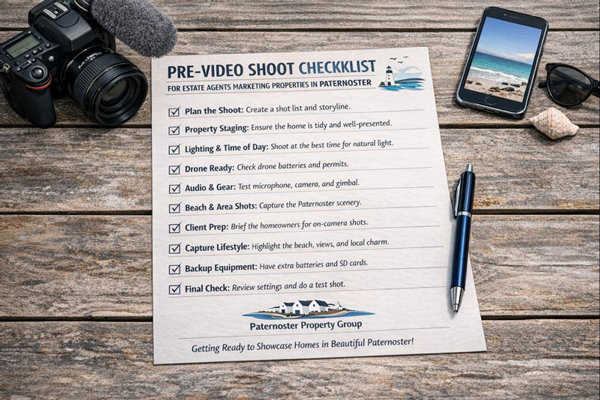
Pre-Photo Shoot Checklist for Estate Agents Marketing Properties in Paternoster
Why Photo Shoot Problems Usually Start Before the Photographer Arrives
When property photos fail to impress, the issue is rarely the camera or the photographer’s skill. In most cases, the problem begins long before the first image is taken. Poor preparation, unclear access arrangements, rushed timing, or misaligned expectations quietly undermine the shoot.
In Paternoster, where buyers are drawn by lifestyle, setting, and visual appeal, photography plays a decisive role in first impressions. Listings compete heavily on presentation. A poorly prepared photo shoot does not just affect image quality. It delays listings, weakens launches, and creates unnecessary friction between agents, sellers, and photographers.
A structured pre-photo shoot checklist turns preparation into a repeatable system rather than a last-minute scramble.
Why Estate Agents Need a Formal Pre-Photo Process
Many agents rely on informal preparation. A booking date is set. The seller is told to “tidy up.” The photographer arrives and hopes for the best.
This approach works occasionally, but it fails as soon as complexity increases. Photography captures details sellers often overlook. Light, reflections, clutter, and alignment all become visible. Small issues that seem insignificant in person become obvious in photos.
A formal checklist protects everyone involved. It saves time, avoids reshoots, and ensures listings launch on schedule with consistent quality. Over time, it becomes part of the agent’s professional identity.
Coordination Between Seller and Agent Comes First
Effective preparation starts with clear coordination between the agent and the seller.
Sellers often underestimate how detailed photography preparation needs to be. Unlike viewings, photos freeze moments permanently. What is acceptable for daily living is rarely acceptable for marketing.
Agents should explain how buyers view listings online and why presentation matters. This conversation sets expectations early and avoids disappointment later.
Clarity at this stage makes sellers more cooperative and reduces last-minute resistance.
Confirming Property Readiness in Advance
Before confirming a shoot date, agents should verify that the property will be fully ready.
This includes decluttering surfaces, removing personal items, and organising furniture to maximise space and flow. Kitchens and bathrooms require particular attention. Small items like dish racks, toiletries, bins, and cleaning products are highly visible in photos.
Bedrooms should feel neutral and spacious. Living areas should be simplified rather than styled heavily. Outdoor areas should be swept, furniture arranged intentionally, and views cleared where possible.
A brief walkthrough or checklist shared with the seller a few days before the shoot prevents common oversights.
Access, Keys, and On-Site Arrangements
Access issues are one of the most frequent causes of delayed or compromised photo shoots.
Agents should confirm who will provide access, whether the seller will be present, and what time the property will be available. Keys should be tested in advance. Alarm systems should be disabled. Pets should be removed from the property for the duration of the shoot.
For gated properties or complexes, access codes and parking arrangements must be confirmed beforehand.
In towns like Paternoster, where many properties are holiday homes or short-term rentals, these checks are essential.
Timing and Light Planning
Photography is highly sensitive to light. The time of day matters.
Agents should coordinate with photographers to determine the best shooting window based on property orientation, interior light, and exterior conditions. Coastal light changes quickly, and harsh midday sun can create deep shadows and blown highlights.
Trying to force a shoot into an unsuitable time slot often leads to flat or compromised images. Flexibility usually results in better photos and faster overall delivery.
Good timing reduces the need for heavy editing and avoids reshoots.
Permissions and Practical Considerations
While photography does not usually require formal permissions, practical considerations still apply.
Sellers should be informed that exterior photos may include neighbouring properties or street views. Sensitive items such as vehicles, security features, or neighbouring activity should be discussed in advance.
If communal areas are included, agents should ensure access is permitted and that the areas are presentable at the scheduled time.
Across the West Coast, weather and wind can affect outdoor shots, so contingency planning is wise.
Aligning Photo and Video Shoots
One of the most effective ways to reduce delays is aligning photography and video shoots.
When both are captured on the same day, the property is prepared once, access is managed once, and marketing assets arrive closer together. This coordination supports stronger listing launches and reduces stress for sellers.
Agents should ensure preparation suits both still images and movement. Furniture placement, lighting consistency, and styling should work from multiple angles.
Alignment also simplifies scheduling and improves overall workflow efficiency.
Briefing the Photographer Clearly
Clear briefs save time and prevent rework.
Agents should communicate the purpose of the photos. Are they for a standard listing, a premium property, or a lifestyle-focused campaign? Which spaces are priorities? Are there features that must be highlighted?
Details such as preferred angles, branding requirements, and intended platforms help photographers work efficiently.
Good briefs are concise but specific. Vague instructions lead to assumptions and revisions later.
Managing People, Pets, and Distractions
Photography requires stillness and control.
People should not be present in rooms being photographed. Pets should be removed. Background distractions such as televisions, fans, or open doors should be managed.
Agents should remind sellers that even short interruptions can slow the shoot and affect consistency across images.
A calm, uninterrupted environment leads to better results.
Preparing Outdoor and Surrounding Areas
Outdoor images are especially important in Paternoster, where lifestyle and setting influence buyer decisions.
Gardens should be tidy. Lawns trimmed. Outdoor furniture cleaned and positioned intentionally. Driveways and streets cleared of vehicles where possible.
Bins, hoses, and temporary items should be removed from view. These details significantly affect perceived quality.
Exterior preparation often has the highest impact for the least effort.
Final Checks Before the Photographer Starts
A final check just before shooting begins prevents avoidable issues.
Lights should be working. Curtains and blinds positioned consistently. Windows clean. Doors unlocked. Reflections checked in mirrors and glass.
This last step often eliminates the need for reshoots caused by simple oversights.
How Checklists Reduce Delays and Reshoots
Reshoots are costly. They delay listings, frustrate sellers, and disrupt marketing plans.
Most reshoots are caused by preparation failures rather than technical issues. A checklist eliminates these failures by standardising preparation.
Agents who use checklists consistently protect their timelines and relationships.
Seller Confidence Improves With Structure
Sellers feel reassured when they see a structured process.
A checklist signals experience and professionalism. Sellers are more cooperative when they understand what is required and why.
This confidence carries through the rest of the sales process and reduces friction later.
Turning Preparation Into a Competitive Advantage
Agents who consistently deliver smooth photo shoots develop a strong reputation.
Photographers prioritise organised agents. Sellers recommend agents who manage marketing effortlessly. Listings launch faster and look more polished.
Over time, preparation becomes part of the agent’s brand rather than just a task.
A Confident Closing
Property photography success begins before the first photo is taken. Preparation determines quality, speed, and seller satisfaction.
Estate agents in Paternoster who use a structured pre-photo shoot checklist reduce delays, avoid reshoots, and protect listing momentum. They strengthen relationships with photographers, build confidence with sellers, and deliver consistently professional results.
In a competitive coastal market, this level of organisation is not optional. It is part of delivering effective property marketing.
Agents who want photography to elevate their listings rather than complicate them should treat preparation as a core part of their workflow and follow a checklist every time.


